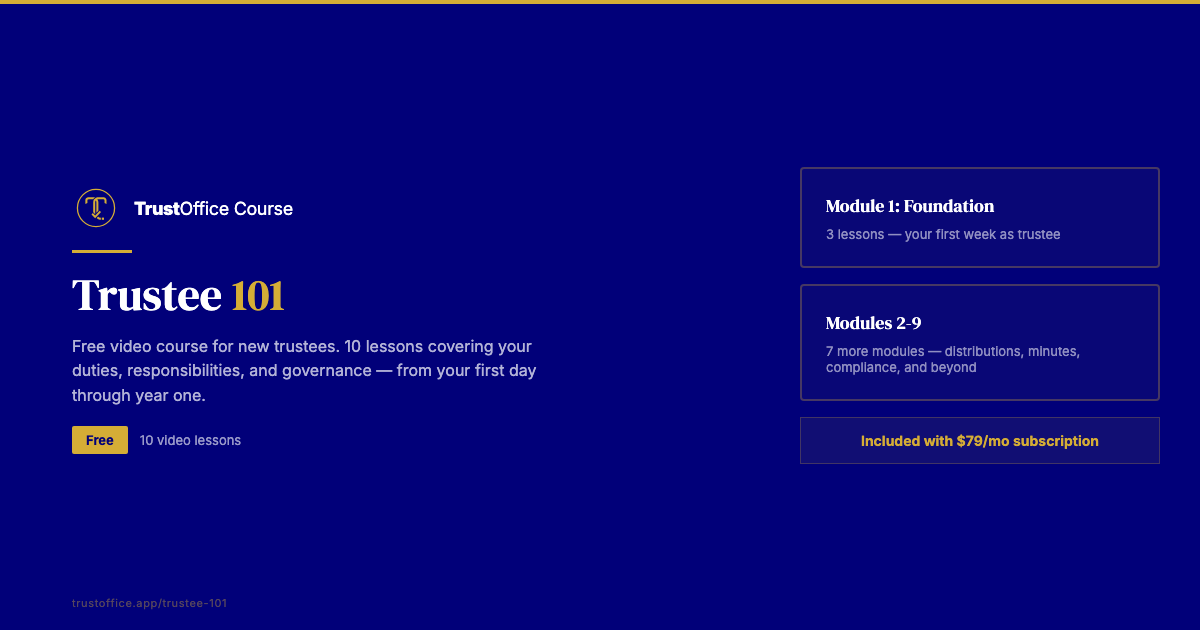
Become enrolled in a Free Trustee Workshop to Elevate Your Skills Right Now
Enrolling in a free trustee course can significantly improve one's professional skills. It delivers essential knowledge on fiduciary duties and financial management. Participants can study at their own pace while networking with industry professionals. This opportunity not only deepens knowledge but also opens doors for professional growth. However, many may question what particular competencies they can expect to gain and how these can be utilized in real-world scenarios.

Essential Capabilities You'll Develop From a Free Trustee Course
A free trustee course equips participants with essential skills vital for sound management and oversight. The course content generally includes key areas such as financial literacy, enabling trustees to understand budgets, financial statements, and investment approaches. Participants also acquire understanding into legal responsibilities, guaranteeing compliance with laws and moral principles.
Furthermore, the program strengthens tactical planning capabilities, equipping people to contribute to extended organizational objectives. Effective communication skills are an additional crucial aspect, enabling board members to express ideas distinctly and interact with stakeholders effectively.
In addition, collaborative and managerial skills are emphasized, fostering collaboration among board members and promoting a constructive decision-making process. Conflict resolution strategies are also covered, readying participants to address disagreements in a professional manner.
Fundamentally, these proficiencies not only ready people for their roles as trustees but also advance their overall administrative prowess, making them valuable assets to any organization.
Top Reasons to Register for a Free Trustee Training for Career Development
Many professionals actively pursue methods for improving their professional development, and enrolling in a no-cost trustee course presents unique perks that can substantially improve one's career advancement. Initially, these courses provide vital knowledge about fiduciary responsibilities, enhancing a professional's standing in their profession. Grasping the moral and legal commitments of a trustee can open up new career opportunities and accountabilities.
Moreover, connecting with industry experts and peers during these courses can result in valuable connections that may facilitate career advancements. Participants also gain hands-on expertise in financial management and governance, which are increasingly sought after in various sectors. Finally, the flexibility of digital learning enables individuals to study at their own speed, making it simpler to manage education with existing work responsibilities. Overall, signing up for a free trustee course not only expands knowledge but can also considerably enhance professional opportunities and career development.
Discovering the Perfect No-Cost Trustee Class for You
How can one pinpoint the most ideal free trustee course among the myriad of options available? First, people must evaluate their distinct objectives and professional aspirations, identifying what expertise or understanding needs they aim to fill. Next, researching course content and structure is essential; a comprehensive course outline can suggest whether the course will align with your needs.
Moreover, reviewing the credentials of the teaching staff can provide understanding into the quality of instruction delivered. Feedback from past participants previous students are essential, as they reflect authentic experiences and outcomes.
Finally, assessing the pliability of the course structure—whether it is self-paced or set—can help in picking a program that accommodates one's personal schedule. By weighing these considerations, students can create a more knowledgeable choice, guaranteeing the picked program matches their professional aspirations and educational needs.
Proven Recommendations for Obtaining Maximum Results from Your Trustee Course
Achieving the maximum benefits of a trustee course calls for a careful approach. Participants need to initiate by establishing clear goals and identifying the exact skills or knowledge they aim to acquire. Active participation in the learning experience is necessary; this includes joining discussions, posing questions, and working with peers. Regular review of the course materials aids in reinforcing understanding and retention of fundamental concepts.
In addition, it is beneficial to document information and create summaries of important topics, facilitating simpler review later. Networking with peer attendees can provide valuable insights and assistance, cultivating a sense of community. Leveraging additional materials, such as recommended readings or web-based discussions, can improve understanding and implementation of acquired knowledge.
In conclusion, applying the knowledge in practical scenarios, whether through real-world applications or simulations, reinforces understanding and strengthens assurance in trustee responsibilities. By adopting these methods, individuals can completely capitalize on their trustee course experience for career and personal advancement.
Everyday Utilizations of Trustee Competencies in Organizational Leadership
Trustee expertise play a crucial role in successful organizational oversight, enabling individuals to traverse intricate institutional environments. These competencies are critical for promoting openness, responsibility, and principled choices within different organizations, including nonprofits, educational institutions, and corporate boards. Trustees outfitted with robust analytical capabilities can assess organizational results, financial health, and compliance with regulations, thereby enhancing comprehensive organizational leadership.
Moreover, effective interpersonal abilities permit trustees to interact with stakeholders, guaranteeing that diverse perspectives are recognized in governance decisions. Conflict resolution abilities are just as vital, as they help preserve harmony and cooperation among board members and other stakeholders. Additionally, forward-thinking planning competencies permit trustees to synchronize organizational goals with wider purposes, ensuring sustainability and growth. In this way, the application of trustee skills in governance reinforces institutional frameworks but also cultivates trust and integrity within communities and organizations.
Frequently Asked Questions
Are No-cost Fiduciary Training Endorsed by Professional Bodies?
Complimentary trustee courses may not consistently be accepted by professional organizations. Approval typically depends on the course provider and the relevant accrediting organization, so students should verify certifications before enrolling in further information any program.
How much time Does a Typical Free Trustee Course Take to Complete?
A typical costless trustee offering generally takes between four to eight weeks to complete. Course span may vary depending on the provider, subject depth, and attendee engagement, allowing for freedom in learning schedules.
Is it Feasible to Acquire a Document Upon Finishing a Free Trustee Course?
Yes, attendees can typically obtain a diploma after finishing a free trustee program. However, certificate options may vary by provider, so people should confirm the particular requirements with the program provider before enrolling.
Are there Caps to How Much Trustee Classes I'm Permitted to Enroll In?
Generally, there exists no cap on the amount of trustee courses one can enroll in. Learners are motivated to pursue multiple courses to broaden their knowledge and skills regarding trustee duties and organizational management.
What Prerequisites Do You Possess to copyright in a Free Trustee Course?
To participate in a no-cost trustee training, attendees typically need a basic comprehension of monetary concepts, commitment to the length of study, and sometimes earlier involvement in fiduciary roles. Exact qualifications may change by institution.